
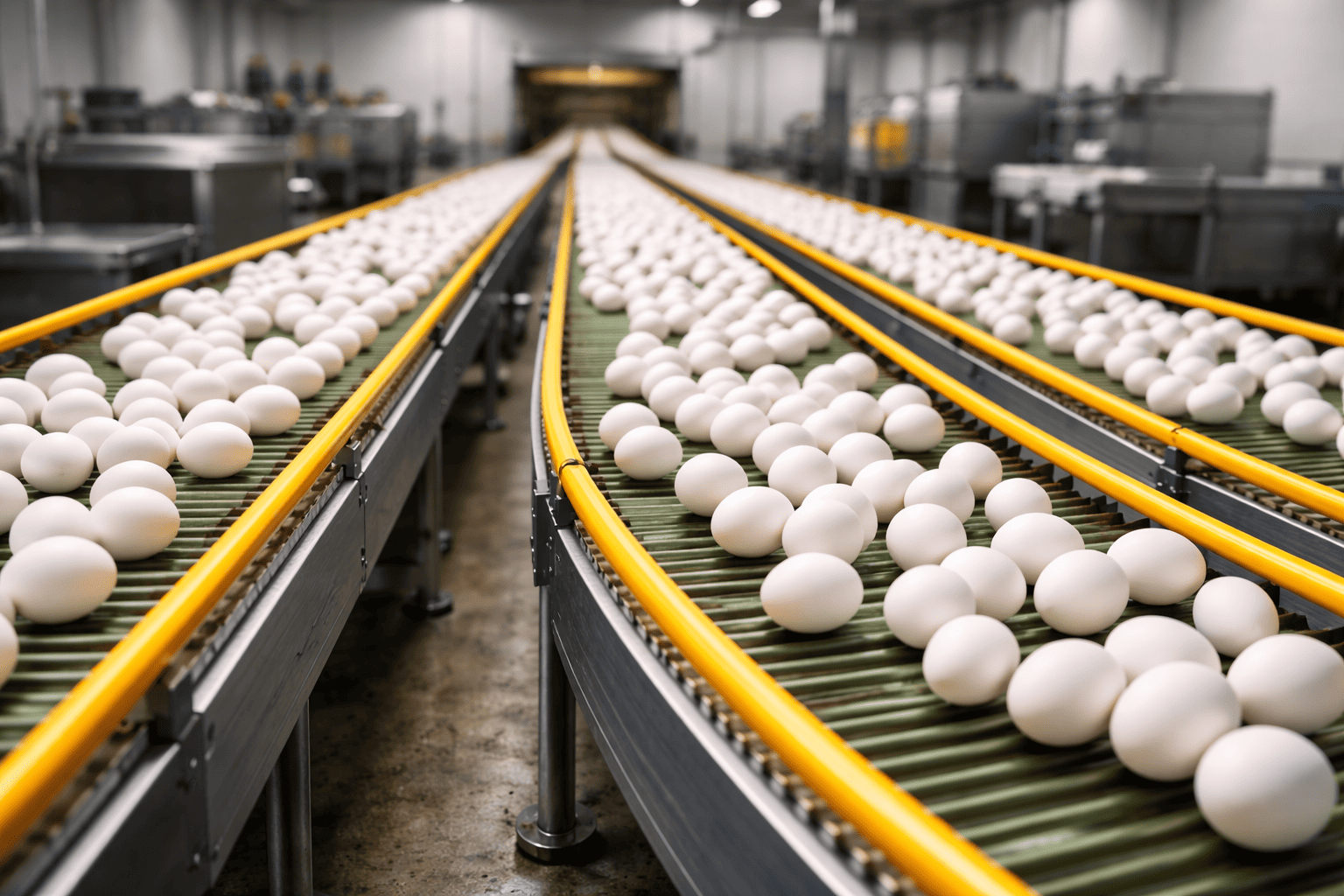
Modern poultry farming is rapidly shifting from manual labour to intelligent systems that improve efficiency, hygiene, and productivity. At the centre of this transformation is the industrial conveyor system, which has become a key component in automated poultry farm operations. By integrating automation into conveyor systems, farms can significantly reduce human intervention while achieving more consistent and reliable performance.
This shift is not just about convenience—it directly impacts operational cost, farm biosecurity, and overall output quality.
Why Automation Matters in Poultry Farming
Automation in poultry farms is designed to handle repetitive and physically demanding tasks such as manure removal, feed distribution, and egg collection. When combined with an industrial conveyor system, these processes become smoother, faster, and more controlled.
Key benefits include:
- Reduced dependency on manual labour
- Improved consistency in daily operations
- Better hygiene and waste management
- Lower risk of contamination and disease spread
How Industrial Conveyor Systems Support Automation
A modern industrial conveyor system acts as the backbone of farm automation by transporting materials efficiently across different sections of the poultry house. When integrated with automated controls, sensors, and timers, the system can operate with minimal human supervision.
For example:
- Manure can be automatically removed at scheduled intervals
- Eggs can be transported gently to collection points
- Feed can be distributed evenly without manual handling
This level of automation helps standardise farm operations and reduces the risk of human error.
Key Components of Automated Conveyor Systems
To fully understand the role of automation, it’s important to look at the main components involved:
- Motorised drive systems – Power continuous movement of the conveyor
- Control panels and timers – Allow scheduled and automated operation
- Sensors and monitoring systems – Detect blockages or system issues
- Durable conveyor belts or chains – Ensure smooth material transport in farm environments
Each component works together to ensure the industrial conveyor system operates efficiently and reliably.
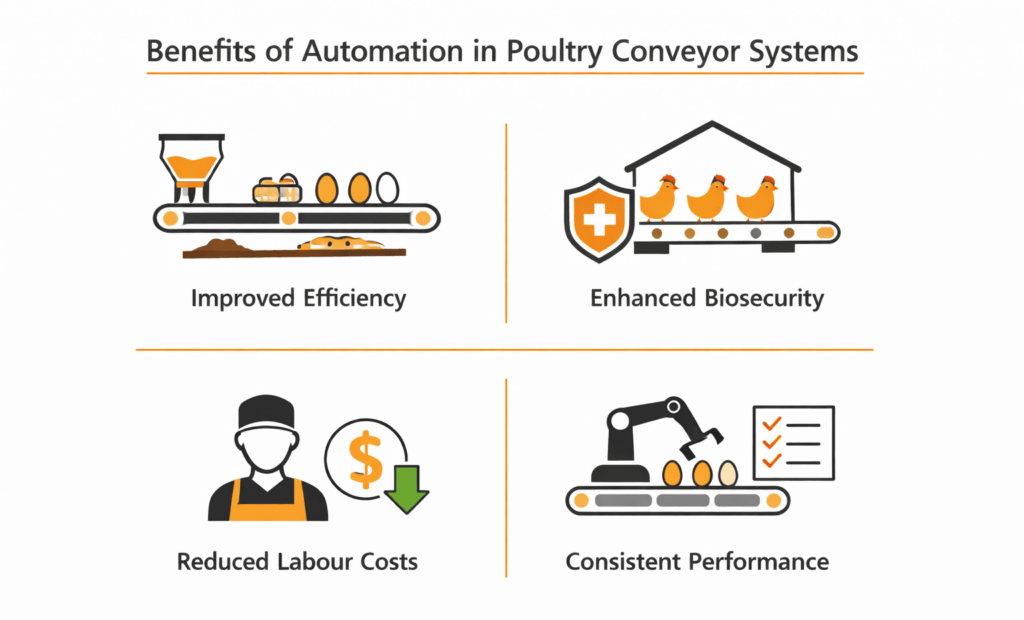
Benefits of Automation in Poultry Conveyor Systems
Improved Efficiency
Automated systems keep operations running on schedule without delays. Tasks like manure removal, feed distribution, and egg collection happen consistently, helping farms avoid disruptions and maintain steady productivity.
Enhanced Biosecurity
Less human contact inside the poultry house means lower risk of disease spread. Automated conveyor systems help maintain a cleaner environment, supporting better flock health and overall farm hygiene.
Reduced Labour Costs
With automation handling repetitive tasks, farms can operate with fewer workers. This lowers labour costs while allowing staff to focus on more important responsibilities like monitoring and management.
Consistent Performance
Automation ensures every task is carried out the same way every time. This reduces human error, improves workflow stability, and helps maintain reliable farm operations day after day.
Automation vs Manual Conveyor Systems in Poultry Farms
Understanding the difference between automated and manual systems helps farm owners make better operational decisions. Here’s a simple comparison to highlight the impact of automation when using an industrial conveyor system:
| Feature | Automated Conveyor System | Manual System |
|---|---|---|
| Efficiency | Runs on schedule with minimal delays | Dependent on worker availability |
| Labour Requirement | Low | High |
| Consistency | High and uniform | Varies based on human handling |
| Biosecurity | Reduced human contact, lower risk | Higher risk of contamination |
| Operational Cost (Long-Term) | Lower over time | Higher due to labour and inefficiency |
| Downtime Risk | Lower with proper setup | Higher due to human error |
Challenges to Consider
While automation offers many benefits, poultry farm owners should also consider:
- Higher initial investment compared to manual systems
- Need for proper installation and system design
- Regular maintenance to ensure long-term performance
Working with an experienced farm equipment supplier helps minimise these challenges and ensures the system is properly tailored to farm requirements.
Future of Poultry Farm Automation
The future of poultry farming is moving toward fully integrated smart systems. Advanced industrial conveyor systems will continue to evolve with IoT monitoring, predictive maintenance, and real-time performance tracking. This will allow farm owners to manage operations more efficiently while reducing unexpected downtime.
Automation is no longer optional—it is becoming a key factor in maintaining competitiveness in modern poultry farming.
Upgrade Your Poultry Farm with Automation
Improve efficiency, reduce labour costs, and streamline operations with a reliable industrial conveyor system designed for modern poultry farming.
Conclusion
Automation plays a crucial role in transforming poultry farm operations, and the industrial conveyor system is at the heart of this change. By reducing manual labour, improving hygiene, and ensuring consistent performance, automated conveyor systems help farms operate more efficiently and sustainably.
For poultry farm owners looking to scale operations or improve efficiency, investing in automation is a long-term solution that delivers measurable benefits in productivity and cost savings.
Frequently Asked Questions (FAQs)
What is an industrial conveyor system in poultry farming?
An industrial conveyor system is a mechanical solution used to transport manure, feed, or eggs efficiently within poultry farms, reducing manual labour and improving workflow.
How does automation improve poultry farm conveyor systems?
Automation allows conveyor systems to operate on schedules or sensor-based triggers, reducing human intervention and improving efficiency, hygiene, and consistency.
Is automation suitable for small poultry farms?
Yes, automated conveyor systems can be scaled and customised based on farm size and operational needs, making them suitable for both small and large farms.
What are the main benefits of automated conveyor systems?
Key benefits include reduced labour costs, improved biosecurity, consistent performance, and more efficient farm operations.
Do automated conveyor systems require maintenance?
Yes, regular maintenance is still required to ensure smooth operation, prevent breakdowns, and extend the lifespan of the system.
Disclaimer:
The information provided in this article is for general informational purposes only. Readers are encouraged to consult with a qualified professional or contact Tong Seh for advice and solutions tailored to their specific needs. While we strive to provide accurate and up-to-date information, we cannot guarantee that it is entirely error-free. Tong Seh Industries Supply Sdn Bhd (TSIS) assumes no responsibility for any errors or omissions.