Introduction: Why Conveyor Systems Matter in Modern Poultry Farming
Modern poultry farms operate on tight schedules, high volumes, and strict hygiene requirements. As farm sizes increase and labour availability becomes more limited, manual handling alone is no longer practical.
Industrial conveyor systems have become a core part of poultry farm infrastructure. They support daily operations by moving feed, eggs, and manure efficiently across poultry houses, helping farms maintain consistency, reduce labour dependency, and improve overall operational control. These systems are commonly deployed in multi-house poultry farm layouts where continuous material flow is required to support daily feeding, egg collection, and waste removal operations.
This article explains how industrial conveyor systems improve efficiency in poultry farms and why they are widely integrated into modern layer, broiler, and breeder operations.
1. Reducing Labour Through Automated Material Flow
One of the most pressing challenges faced by poultry farms today is labour availability. Tasks such as feed distribution, egg collection, and manure removal are repetitive, time-sensitive, and physically demanding.
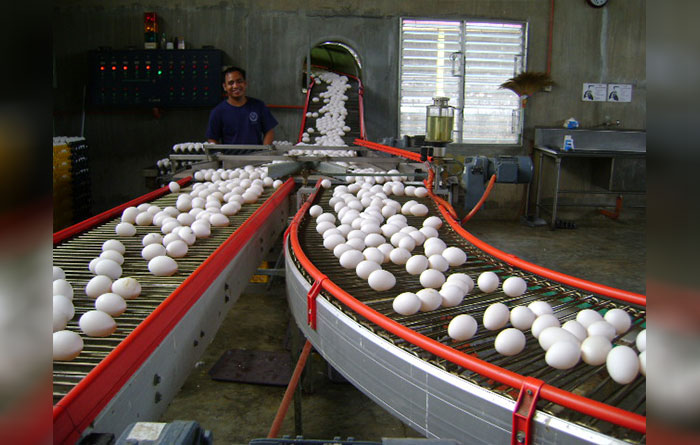
Industrial conveyor systems automate these material flows by transporting feed from silos to feeding lines, moving eggs from cages to central collection areas, and removing manure from beneath cages. This reduces the need for manual handling and allows farm staff to focus on bird health monitoring and routine maintenance. This becomes particularly critical during peak feeding and egg collection cycles, where delays caused by manpower shortages can directly affect productivity.
2. Improving Hygiene and Biosecurity in Poultry Houses
Maintaining hygiene standards is essential in poultry farming, especially in large-scale operations. Excessive human contact with feed, eggs, and waste increases the risk of contamination and disease transmission.
By minimising manual handling, conveyor-driven systems help standardise hygiene practices across long poultry house layouts and multiple production cycles. Eggs are transferred through dedicated egg conveyor systems, feed is delivered via enclosed feed conveyors, and manure is removed regularly using dedicated waste transport systems. This controlled movement supports better biosecurity and cleaner production environments.
3. Maintaining Consistency Across Large-Scale Farm Operations
As poultry farms expand, maintaining consistency becomes more challenging. Long houses, multi-tier cage systems, and varying elevations require reliable and continuous material transport.
Industrial conveyor systems are designed for daily operation over long distances, ensuring uniform feed delivery, stable egg collection speeds, and timely waste removal. Consistent conveyor performance helps stabilise production results and reduces variation caused by uneven manual processes. This is especially important in layer and breeder farms, where egg handling consistency directly affects quality and output.
4. Supporting Different Poultry Farm Segments
Different poultry segments rely on conveyor systems in different ways.
Layer and Breeder Farms
Egg handling is a priority. Conveyor systems for these operations are designed for gentle transport with stable speed and low vibration to minimise shell damage during continuous egg movement.
Broiler Farms
Feed delivery efficiency is critical. High-capacity feed transfer conveyors, such as flex auger systems, support consistent feed distribution to maintain growth rates across large flocks.
Waste Management Across All Segments
Manure removal conveyors, commonly used in manure belt battery systems, help improve air quality, reduce ammonia levels, and maintain cleaner living conditions inside poultry houses.
In practice, these conveyor systems are often engineered to operate in coordination so feeding, egg collection, and manure removal processes do not interfere with one another.
5. Where Industrial Conveyor Systems Are Commonly Integrated
In modern poultry farms, conveyor systems are rarely used in isolation. They are typically integrated with other equipment such as:
- Egg conveyors and egg elevators
- Automatic feeding systems
- Manure belt and waste removal systems
- Layer and breeder cage installations
This system-level integration allows farms to streamline workflows and improve overall operational efficiency rather than addressing individual tasks separately. When evaluating an industrial conveyor system for poultry farms, understanding how these components work together is essential for long-term performance.
Conclusion: Conveyor Systems as a Foundation for Efficient Poultry Farming
Industrial conveyor systems play a vital role in improving efficiency, hygiene, and consistency in poultry farm operations. By automating material movement, they help farms reduce reliance on labour, maintain biosecurity standards, and support large-scale production requirements.
Whether for feed delivery, egg collection, or manure removal, conveyor systems form the backbone of modern poultry farm infrastructure. Selecting the right system and integrating it properly with existing equipment can significantly influence long-term operational stability.
Considering an Upgrade to Your Poultry Farm Systems?
If you are planning to improve efficiency or expand your poultry operations, understanding how conveyor systems fit into your farm layout is a practical first step.
Tong Seh Industries Supply Sdn Bhd provides industrial conveyor systems for poultry farms in Malaysia, designed to integrate with feeding, egg collection, and manure management equipment.
Speak with our team to discuss a conveyor solution tailored to your farm layout and operational needs.
Disclaimer:
The information provided in this article is for general informational purposes only. Readers are encouraged to consult with a qualified professional or contact Tong Seh for advice and solutions tailored to their specific needs. While we strive to provide accurate and up-to-date information, we cannot guarantee that it is entirely error-free. Tong Seh Industries Supply Sdn Bhd (TSIS) assumes no responsibility for any errors or omissions.