Introduction: Why Conveyor Systems Matter in Modern Poultry Farming
Industrial conveyor systems improve poultry farm efficiency by automating repetitive material handling tasks such as feed delivery, egg collection, and manure removal. By reducing manual handling and creating a more consistent workflow, these systems help commercial poultry farms improve productivity, support better hygiene, and manage daily operations more efficiently.
For modern poultry farms, efficiency is not simply about reducing labour. It also involves maintaining consistent feeding schedules, streamlining egg collection, improving waste management, and ensuring daily operations continue smoothly as production capacity increases. Without the right material handling system, these repetitive processes become increasingly difficult to manage, particularly in large-scale or multi-house farms.
This article explains how industrial conveyor systems improve operational efficiency, why they have become an important part of modern poultry farming, and how they support different types of poultry operations. If you are looking for a complete overview of available conveyor solutions, read our guide on Industrial Conveyor Systems for Poultry Farms in Malaysia.
How Do Conveyor Systems Reduce Labour Requirements?
Labour availability remains one of the biggest operational challenges for commercial poultry farms. Daily activities such as transporting feed, collecting eggs across long cage rows, and removing manure require significant time and manpower when carried out manually.
Industrial conveyor systems automate these repetitive material handling processes, reducing the need for workers to move materials throughout the farm. Instead of spending hours on routine transportation, farm staff can focus on higher-value activities such as bird health monitoring, equipment inspection, production management, and routine maintenance.
For farms operating multiple poultry houses, reducing unnecessary manual movement also improves workflow efficiency and helps daily operations run more consistently.
How Do Conveyor Systems Improve Feed Management?
Consistent feed delivery is essential for maintaining stable poultry production. Delays, uneven distribution, or excessive manual handling can affect bird performance and increase feed wastage.
Feed conveyor systems improve efficiency by transporting feed automatically from storage areas to feeding lines, ensuring birds receive feed more consistently while reducing manual transportation throughout the farm.
Our Flex Auger automatic feeding system is designed to transport feed efficiently across different poultry house layouts. Suitable for pellets, granules, flour, and mixed feed, the system supports capacities from 400 kg/h to 4,000 kg/h and can deliver feed to multiple poultry houses despite differences in distance, height, or layout.
Benefits include:
- More consistent feed distribution
- Reduced manual feed handling
- Lower feed wastage
- Improved feeding efficiency across multiple poultry houses
- Better control over daily feeding schedules
Reliable feed management supports more organised daily operations across layer, broiler, and breeder farms.
How Do Conveyor Systems Improve Egg Collection Efficiency?
Egg collection is one of the most labour-intensive activities in commercial layer farming. As production increases, manually collecting eggs from long cage rows becomes increasingly time-consuming and may affect overall workflow efficiency.
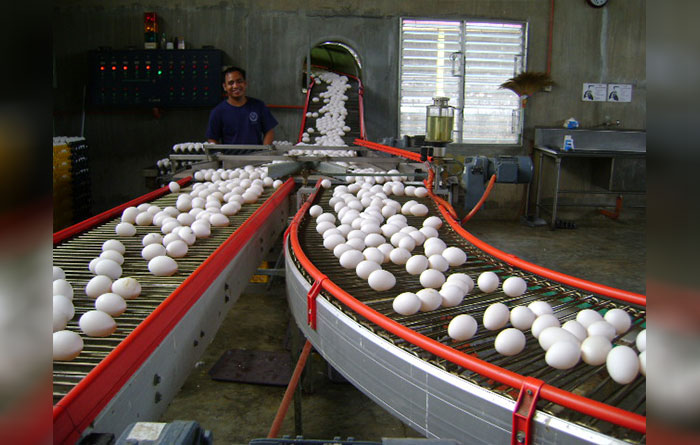
Egg conveyor systems automate this process by transporting eggs directly from cage systems to a central collection area, reducing repeated manual handling while creating a smoother and more organised collection process.
Our customised LUBING egg conveyor systems are designed according to each farm’s cage arrangement, poultry house layout, row length, and production requirements. Stable conveyor movement helps transport eggs efficiently while reducing unnecessary handling throughout the collection process.
Key benefits include:
- Faster egg collection
- Reduced labour requirements
- Improved workflow organisation
- Lower risk of unnecessary egg breakage
- More consistent egg handling across the poultry house
For commercial layer farms, efficient egg collection contributes to smoother daily operations and improved production efficiency.
Also Read: How Automatic Layer Cage Systems Reduce Labour Costs in Poultry Farms
How Do Manure Conveyor Systems Improve Poultry House Hygiene?
Maintaining good hygiene is essential for commercial poultry production. Manual waste removal is labour-intensive, and allowing manure to accumulate can negatively affect poultry house conditions.
Manure conveyor systems automate waste removal, helping farms maintain cleaner poultry houses while reducing the daily workload associated with manual cleaning.
Our MBB (Manure Belt Battery) layer cage systems incorporate integrated manure belt conveyors installed beneath each cage tier. These belts regularly collect and transport manure away from the poultry house, helping reduce manual cleaning requirements while supporting cleaner cage environments.
Regular manure removal provides several operational benefits:
- Improved poultry house hygiene
- Reduced manure accumulation
- Better air quality through lower ammonia build-up
- Reduced manual cleaning requirements
- A cleaner environment for both birds and farm workers
When combined with automated feeding and egg collection, manure conveyor systems help create a more efficient and better-managed poultry production environment.
Why Is Workflow Consistency Important for Poultry Farms?
Maintaining a consistent daily workflow is essential for efficient poultry production. Feed needs to be delivered on time, eggs should be collected promptly, and manure must be removed regularly to maintain suitable house conditions.
When these tasks rely entirely on manual labour, delays can occur due to workforce availability, travel distance, or inconsistent working routines. As farms expand, these small inefficiencies can affect overall productivity and make operations more difficult to manage.
Industrial conveyor systems help standardise repetitive material handling processes, allowing farms to maintain more predictable daily operations. With automated feed delivery, egg collection, and manure removal working together, farm managers can better coordinate production activities while reducing operational disruptions.
How Do Conveyor Systems Support Different Poultry Farms?
| Poultry Farm Type | Typical Conveyor Solution | Main Operational Benefit |
|---|---|---|
| Layer farms | Feed conveyor, egg conveyor, manure conveyor | Automates feeding, egg collection, and waste removal to improve daily efficiency. |
| Broiler farms | Feed conveyor | Delivers feed consistently across large flocks while reducing manual transportation. |
| Breeder farms | Feed conveyor and egg conveyor (depending on housing system) | Supports consistent feeding and efficient egg handling. |
| Multi-house farms | Centralised feed conveyor system | Improves feed distribution across multiple poultry houses from a central storage point. |
Rather than selecting every available conveyor system, farms should choose a configuration that matches their housing design, production goals, and long-term operational requirements.
Also Read: How to Choose the Right Conveyor System for Your Poultry Farm
Can Conveyor Systems Support Future Farm Expansion?
As poultry farms increase production capacity or add more poultry houses, manual material handling becomes progressively more difficult to manage.
Industrial conveyor systems can be designed with future expansion in mind, making it easier to increase production without significantly increasing labour requirements.
When planning a new conveyor installation, it is worth considering:
- Current flock size
- Future production targets
- Poultry house layout
- Existing equipment compatibility
- Maintenance accessibility
Planning ahead helps reduce the need for major system modifications as the farm grows and ensures the conveyor system continues to meet operational requirements over the long term.
Why Is Equipment Integration Important?
Industrial conveyor systems deliver the greatest operational benefits when they work together with other poultry equipment rather than operating as standalone systems.
Depending on the farm layout and production requirements, conveyor systems can be integrated with:
- Automatic feeding systems
- Egg conveyor systems
- Egg elevators
- Layer cage systems
- Breeder cage systems
- Manure belt systems
By integrating these systems into a single workflow, farms can improve operational efficiency, simplify daily management, and create a more organised production process.
If you are planning a complete poultry automation system, understanding how these components work together is just as important as selecting the right conveyor.
Also Read: Avoid Costly Mistakes: 7 Questions to Ask Before Choosing an Industrial Conveyor
Improve Poultry Farm Efficiency With the Right Conveyor System
Improving poultry farm efficiency involves more than automating a single task. Feed delivery, egg collection, and manure management all work together to create smoother daily operations and support consistent production.
The right industrial conveyor system helps reduce manual handling, improve workflow consistency, support better hygiene management, and provide a scalable solution as poultry operations grow.
At Tong Seh Industries, we provide customised industrial conveyor solutions designed to integrate with your poultry farm layout, production requirements, and existing equipment. Whether you are upgrading an existing farm or planning a new installation, our team can recommend a solution that suits your operational needs.
Plan Your Poultry Conveyor System With Tong Seh
Looking to improve your poultry farm automation? Speak with our team to discuss your farm requirements and find a suitable conveyor solution.
Frequently Asked Questions (FAQs)
How do industrial conveyor systems improve poultry farm efficiency?
Industrial conveyor systems improve efficiency by automating feed delivery, egg collection, and manure removal. This reduces manual handling, improves workflow consistency, and helps commercial poultry farms manage daily operations more efficiently.
Which poultry farms benefit most from conveyor systems?
Layer farms generally benefit the most because they require feed delivery, egg collection, and manure management. Broiler farms mainly benefit from automated feed transportation, while breeder farms may require both feed and egg conveyor systems depending on their production setup.
Can conveyor systems reduce labour requirements?
Yes. Conveyor systems automate repetitive material handling tasks, allowing farm workers to focus on bird health monitoring, equipment maintenance, and production management instead of manual transportation.
How do conveyor systems improve poultry house hygiene?
Conveyor systems reduce unnecessary manual handling while supporting regular manure removal. This helps maintain cleaner poultry houses, improves air quality, and supports better overall farm hygiene.
Can conveyor systems be integrated with existing poultry equipment?
Yes. Depending on the farm layout, conveyor systems can be integrated with automatic feeding systems, egg collection equipment, poultry cage systems, and manure belt systems to create a more efficient production workflow.
What should I consider before choosing an industrial conveyor system?
Important considerations include your poultry operation, flock size, farm layout, production goals, existing equipment, and future expansion plans. Choosing the right configuration helps ensure the system supports both current and long-term operational requirements.
Disclaimer:
The information provided in this article is for general informational purposes only. Readers are encouraged to consult with a qualified professional or contact Tong Seh for advice and solutions tailored to their specific needs. While we strive to provide accurate and up-to-date information, we cannot guarantee that it is entirely error-free. Tong Seh Industries Supply Sdn Bhd (TSIS) assumes no responsibility for any errors or omissions.