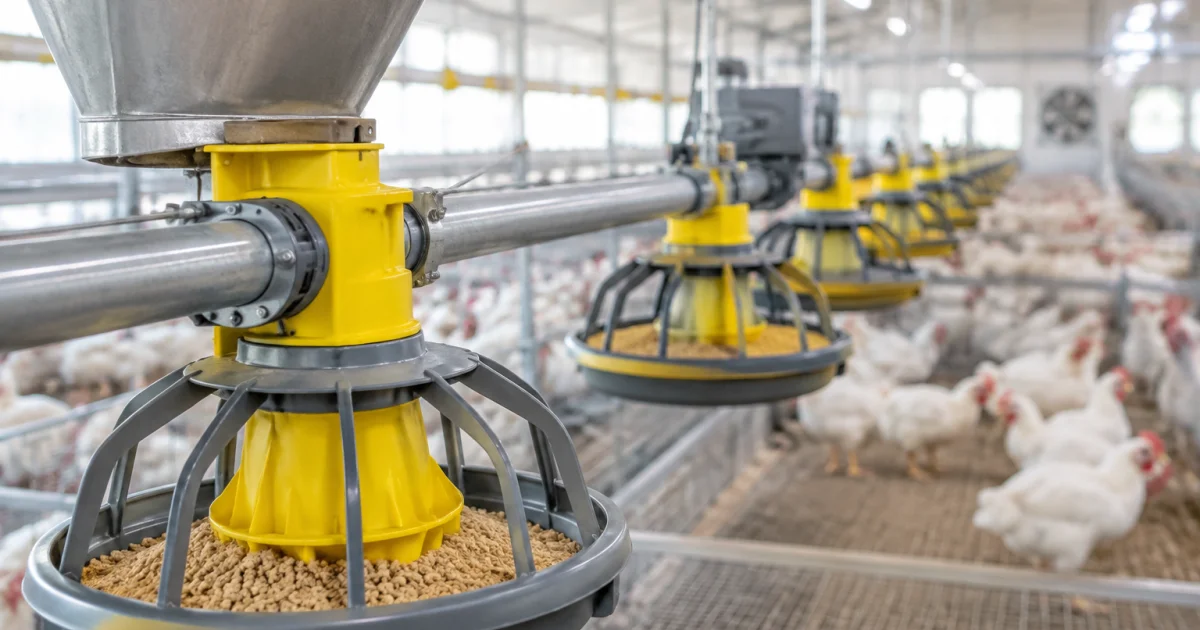
Across Malaysia’s commercial poultry sector, the direction is clear: less manual work, more repeatable processes, and tighter control of inputs. For procurement managers, integrators, and large-scale operators, that shift turns feeding from a “necessary utility” into a core automation backbone. A feeding upgrade is rarely “just a line and a motor”—it influences storage, distribution, drinkers, ventilation, and even egg-handling workflows.
This is why industrial chicken feeder demand often moves with broader automation decisions. The goal here is to translate Malaysia’s automation push into practical purchase criteria and supplier questions, using procurement-friendly terms like capacity, uptime, maintenance, spares, and commissioning—while connecting feeding decisions to adjacent poultry equipment you may upgrade in parallel.
Why automation momentum changes feeding priorities (and budgets)
Automation programs tend to start with familiar pressure points: labor availability, higher expectations for consistency, and the need to reduce variability across multiple houses. Feeding stands out because it is frequent, time-sensitive, and directly tied to daily KPIs (consumption, uniformity, conversion, mortality). Automating it replaces shift-to-shift variability with a standard operating process you can replicate across sites.
For procurement, that changes the buying conversation:
- Capex justification shifts from “replace worn equipment” to “standardize operations,” increasing the need for documented specifications and acceptance criteria.
- Reliability and serviceability rise to the top. If feeding stops, the impact is immediate—so component quality, dust protection, and maintenance access matter.
- Feeding becomes a platform for future upgrades (climate control, drinker lines, egg collection). Choosing compatible architectures reduces rework later.
What “industrial” means in a feeder upgrade (beyond bigger motors)
In poultry feeding, “industrial” is less about scale and more about duty cycle, predictability, and maintainability. A setup that’s acceptable in a small operation can become a bottleneck in a high-capacity house where feeding windows are tight and downtime is costly.
When assessing an industrial-grade solution, look for design choices that support repetitive operation in dusty conditions:
- Drive and transmission robustness matched to line length, load profile, and start-up torque.
- Stable, uniform distribution so birds across the house get comparable access and timing.
- Service access for inspection, cleaning, adjustments, and part replacement without major dismantling.
- Known wear parts with clear replacement intervals and readily available spares.
- Integration readiness with storage and transfer (e.g., silos and augers), aligned to your building constraints.
Specify the full feed pathway (storage → transfer → distribution → pans/troughs). In many projects, performance limits come from upstream constraints (silo discharge, transfer sizing, bridging) rather than the line inside the house.
System architectures procurement teams compare: auger, chain, and hybrid layouts
Most commercial projects compare feed distribution approaches based on house type (cage vs floor), bird type (layers vs broilers vs breeders), and the level of timing/uniformity control required over long runs.
Flex auger and related auger feeder configurations
Auger-based transport is often specified where routing flexibility and enclosed conveyance help reduce spillage. “Auger feeder” can mean different segments, so clarify whether the supplier is quoting for the transfer auger (silo to hopper), in-house distribution, or both.
Key procurement considerations:
- Line length and bends: Routing affects throughput and wear; plan routes and sizing early.
- Feed characteristics: Pellet vs mash, fines level, and oil content influence flow and bridging risk.
- Wear and inspection: Define how operators will check wear, blockages, and dust build-up without disrupting production.
- Spares strategy: Identify critical wear parts to stock on-site and confirm lead times for components that could stop feeding.
Evaluate auger solutions end-to-end so upstream capacity and in-house demand match, rather than mixing components with incompatible capacities.
Chain distribution in larger houses
Chain systems are commonly chosen where consistent distribution across long runs is required and houses are designed around that layout. For industrial operations, tensioning, wear monitoring, and access determine total cost of ownership.
Pin down:
- Access points: Where can teams inspect and adjust quickly?
- Dust handling: How does the design reduce dust accumulation at drives and corners?
- Uniformity over time: How will distribution consistency be verified after months of operation?
Hybrid planning: using the right method for each segment
Many upgrades combine methods: storage/transfer sized for reliable supply, then in-house lines optimized for the housing system. Hybrid planning can also reduce risk by addressing failure-prone segments and standardizing parts across houses.
Actionable tip: ask suppliers for a simple block diagram of the complete pathway (silo → transfer → hopper → distribution → pans/troughs). Use it to identify single points of failure and confirm contingency plans.
How feeder demand links with cages, broiler equipment, and house design
Housing choices shape feeder specifications. The same automation push driving feeders often drives cage upgrades, house retrofits, and integrated broiler packages. Treat feeding as part of the house “operating system,” not a stand-alone item.
Layer houses: cage layouts and feeding interfaces
In cage-based layer production, the interface between feeder lines and cage rows affects installation quality, long-term maintenance, and downtime. Small layout decisions (alignment, mounting height, corridors) can create years of friction if missed.
Coordinate early:
- Row spacing and service corridors: Ensure access for inspection and cleaning.
- Distribution points: Plan line entry points to avoid unnecessary bends and awkward routing.
- Feed delivery method: Match the cage system’s feeding behavior and minimize spillage.
Even when cages are procured separately, request drawings to validate feeder routing and service clearances—this is where many retrofits drift into costly compromises.
Broiler houses: pan feeding, line length, and operational rhythm
For broilers, automated lines are typically designed around growth curves and daily management routines. A good specification supports repeatable feeding cycles without staff needing to “babysit” the system.
Consider interactions with:
- Ventilation and cooling: Unstable climate control can distort intake patterns and make feeding performance look “wrong.”
- Power resilience: Protect critical motors/controls and plan for weather-related interruptions.
- Cleanout and turnaround: Between flocks, define how quickly lines can be inspected, cleaned, and restarted.
Breeders: consistency and control
Breeders often require tighter control of allocation and distribution consistency. Specifications commonly emphasize adjustability, predictability, and a documented commissioning procedure aligned to the farm’s feeding program.
Procurement checklist: specs that separate “works” from “works every day”
When automation demand rises, many systems look similar in brochures. Reduce risk by forcing clarity in specifications, assumptions, and handover acceptance criteria.
1) Throughput and distribution: size for the house you will run
Match line capacity to house length, bird numbers, feeding window, and feed type. Undersized systems may still operate, but they can stretch feeding time and create uneven access.
Request from suppliers:
- Design basis: birds per house, line length, feed type, target feeding cycle.
- Assumptions list: conditions required to meet performance (feed quality, routing limits, power conditions).
- Commissioning checks: what will be verified on-site (cycle time, distribution consistency, motor load behavior).
2) Reliability engineering: dust, heat, humidity, and farm conditions
Dust, humidity, washdowns, and vibration are normal. Evaluate how the design copes with these realities and how quickly your team can restore operation after a failure.
- Drive-unit protection: shielding from dust plus practical cleaning/inspection access.
- Motor/control placement: consider moisture/heat exposure and safe service access.
- Mechanical simplicity: fewer complex adjustment steps typically reduces maintenance errors under time pressure.
3) Maintenance model: who does what, and how often?
Automation only works if maintenance routines fit your staffing level. Ask suppliers for a realistic plan, then validate it against your team’s capacity.
- Daily/weekly checks: what operators should observe during rounds.
- Periodic service tasks: inspections, tension checks, cleaning steps, replacement intervals.
- Spares list: critical vs consumable parts, and what should be held on-site.
Tip: require basic operator training and maintenance handover documentation—especially for multi-house rollouts where standardized routines matter.
4) Expandability: plan for phased upgrades
Many Malaysia projects roll out in phases. Prefer systems that can scale (additional lines/houses, increased upstream capacity) without major redesign.
Ask what changes are required upstream if you add capacity next year (silo volume, transfer auger sizing, control points). This is where evaluating feeding alongside storage prevents “starved line” problems later.
Practical examples: common upgrade paths and how to specify them
These examples are planning patterns to help structure scope and supplier questions—not performance claims.
Example 1: Retrofit an older layer house while keeping production running
Scenario: A layer farm wants to reduce manual distribution and improve consistency, with limited shutdown time.
- Installation constraints lead: require staging and access planning to minimize disruption.
- Standardization over complexity: prioritize fast replacement and predictable maintenance.
- Interface checks with existing cages: confirm mounting points, clearances, and service access before fabrication.
Procurement move: require a site survey (or validated drawings) plus a commissioning checklist before scope sign-off.
Example 2: New broiler house build with integrated feeding and ventilation
Scenario: A new build targets high repeatability, designing feeding, drinking, and climate control together.
- Coordinate with airflow: placement shouldn’t obstruct ventilation; dust management belongs in the design.
- Size upstream storage/transfer: ensure the in-house system is never starved of feed.
- Plan electrical/controls layout: protect critical components and maintain service access for all systems.
Related consideration: align installation and commissioning timelines with fans/cooling pads so one system doesn’t mask issues in another.
Example 3: Multi-house standardization for an integrator
Scenario: An integrator standardizes a feeder platform across farms to simplify training and spares.
- Standard BOM and spares kit: push for consistent parts across sites where possible.
- Repeatable commissioning: document settings, checks, and acceptance criteria for consistent handover.
- Supplier support model: confirm response process for urgent failures and ability to support scale.
Procurement move: evaluate suppliers on rollout capability and after-sales support, not only equipment lists.
Supplier evaluation: questions that reveal engineering depth and after-sales readiness
BOFU decisions are risk-management decisions. Use questions that expose engineering rigor and service readiness.
Engineering and suitability
- How do you size the system end-to-end (silo to line), and what farm inputs do you require?
- What routing constraints apply (max lengths, bends, elevation changes), and how do you validate them?
- How do you account for mash vs pellet flow behavior?
- What are the known wear components, and how are they replaced?
Installation and commissioning
- What is in your commissioning checklist, and what will be verified before handover?
- What training is provided for operators and maintenance teams?
- How do you stage retrofits when production must continue?
Service and parts
- Which critical spares should be stocked on-farm to reduce downtime risk?
- Are parts standardized across product lines or highly unique?
- How do you support multi-site operations (response, escalation, documentation)?
Connecting the dots: feeding, egg handling, and conveyors in automated layer operations
Layer farms often automate in bundles—feeding plus egg handling plus manure removal—because labor savings and consistency compound when workflows are redesigned end-to-end. Feeding decisions also affect egg belts and conveyors through house layout, corridor widths, and maintenance access.
If egg collection upgrades are on your roadmap, check for equipment clashes and service constraints early. For example, tight corridors can make it difficult to reach an egg conveyor drive area without disturbing feeding lines. Catching these interface issues on drawings is cheaper than rework after installation.
For further reading on conveyors:
- How Industrial Conveyor Systems Improve Efficiency In Poultry Farms
- Industrial Conveyor Systems For Poultry Farms In Malaysia
If egg handling is in near-term scope, this overview can help align interfaces during procurement:
What to do next: a practical buying plan for automated feeding upgrades
To translate “automation push” into an implementable feeding upgrade, use a structured plan to reduce installation and commissioning surprises.
- Define the scope boundary: in-house distribution only, or also storage, transfer, and controls.
- Collect baseline constraints: drawings/measurements, routing limits, feed type, operating rhythm, maintenance capability, expansion plans.
- Set acceptance criteria: what will be verified at handover (operation checks, distribution checks, training completion, spares delivery).
- Shortlist suppliers on fit: end-to-end sizing capability, phased rollout experience, and practical documentation/service support.
- Align adjacent systems: coordinate feeding with storage, drinkers, fans, and climate control so you don’t optimize one system while constraining another.
When comparing options, it can help to review feeding and storage together to ensure upstream capacity is not overlooked:
With a clear specification, you can compare proposals on engineering suitability, installation readiness, and lifecycle support—not just initial price.
Conclusion: feeder demand grows when farms standardize for uptime
Malaysia’s automation direction places feeding at the center of operational standardization. As more farms shift toward repeatable, lower-labor routines, demand increases for solutions that run reliably in real farm conditions, scale across multiple houses, and integrate smoothly with storage, ventilation, cages, and egg handling layouts.
For procurement teams, the strongest approach is to treat feeding as an engineered system: define constraints, size end-to-end, plan installation and commissioning, and evaluate suppliers on serviceability and support. Done well, an automated feeding project becomes a foundation for broader productivity upgrades across the farm.
Frequently Asked Questions
How do I choose between an auger feeder and a chain feeding system?
Start with your house type (cage vs floor), line length, routing complexity (bends/elevation), and how tightly you need consistent distribution across long runs. Auger-based systems can be helpful where enclosed routing and flexible layout matter, while chain systems are often chosen for long, consistent distribution layouts. Ask each supplier to size the complete feed pathway (silo to line) and explain the assumptions behind their recommendation.
What information should I prepare before requesting a quote for an automated feeding upgrade?
Prepare basic house drawings or measurements (length, width, row layout), bird type and target capacity, feed type (mash/pellet), preferred feeding schedule, existing upstream storage details (if any), electrical constraints, and whether this is a retrofit with limited downtime. The clearer the constraints, the more accurate the design and pricing will be.
Can an industrial chicken feeder system be installed without stopping production?
Many retrofits can be staged to reduce downtime, but feasibility depends on access, house layout, and safety constraints. For live-production work, require a documented installation method statement, staging plan, and commissioning checklist. Also confirm how the supplier will protect birds and prevent contamination during installation activities.
Which spare parts should large farms keep on-site for automated feed lines?
It depends on the system design, but you should generally stock critical wear parts and any components that would cause a full feeding stop if they fail. Ask your supplier for a recommended spares kit categorized by “critical” versus “consumable,” along with expected lead times so you can set an appropriate on-farm inventory policy.
How does feeding automation interact with other poultry equipment like cages, fans, and egg conveyors?
Feeding lines share space, power, and maintenance access with cages, ventilation equipment (including fans and cooling systems), and egg handling routes. Poor coordination can create tight service corridors or equipment clashes that increase downtime. During design, review a full layout drawing and confirm clearances for inspection and servicing across all systems, not only feeding.
Plan a feeder upgrade with Tong Seh
If you’re evaluating automated feeding upgrades for a layer, broiler, or breeder operation, Tong Seh can help you scope and specify a solution that fits your house layout, expansion plan, and maintenance reality. With over 40 years of experience since 1981, we support complete farm equipment planning—from feeding and feed storage to drinking systems, egg handling, and environmental control—so your automation investments work together as one system.
Share your house dimensions, bird type, and upgrade goals, and we’ll help you map the feed pathway (storage to distribution), identify practical installation constraints, and shortlist the right configuration for your project.
Disclaimer:
The information provided in this article is for general informational purposes only. Readers are encouraged to consult with a qualified professional or contact Tong Seh for advice and solutions tailored to their specific needs. While we strive to provide accurate and up-to-date information, we cannot guarantee that it is entirely error-free. Tong Seh Industries Supply Sdn Bhd (TSIS) assumes no responsibility for any errors or omissions.